
Grammar Programs for Grades K-3

Heads Up: The links below are affiliate links. That just means that if you purchase through one of my links, I may earn some money, at no extra cost to you. Learn more. As always, I seek to provide HONEST reviews!!
What All About Reading Covers (And What It Doesn’t)
As I’ve written about before, All About Reading is a PHONICS program. Meaning it doesn’t cover every aspect of the “English Language Arts” curriculum. However, it does a great job at what it is - a READING PROGRAM.
We have been All About Reading (AAR) users for the past four years. My oldest is currently in level 4 with my younger ones following behind.

While AAR covers phonics and reading, including comprehension, it isn’t a writing program or a language arts (“Grammar”) program. They have a separate program called “All About Spelling” which I plan to review once we are a bit further along in it.
But they don’t cover nouns, verbs, etc. So how do I cover that stuff?
Want to know more about All About Reading? Check out these posts:
Or access all of my “AAR Articles” in one place at: All About All About Reading
But, What About Grammar?
How can we add grammar alonside this curriculum without overwhelming our kids or ourselves?
My mantra for kindergarten and first grade “grammar” is keep it short and simple. In order to do this, I used an oral grammar program for my kindergarten through second graders.
Grammar for Kindergarten Through 2nd Grade

For kindergarten through 2nd grade, we used “First Language Lessons” by The Well-Trained Mind Press.
We used level 1 and part of level 2 before moving on to a different program in third grade.
I’m working through First Language Lessons with my second kid now, and it’s continued to be a quick and easy way to get grammar done without overwhelming us or taking very long. Literally each lesson takes about 5 minutes.
How I’ve Used First Language Lessons
Here’s how I’ve used FLL and what I’ve liked about it…
With my boys I started First Language Lessons level 1 in either kindergarten or first grade. While it is recommended for grades 1-2, it works as early as kindergarten because the lessons only take about 5 minutes to do orally. We just did the oral part (and skip the copywork, which is added on starting with lesson 42).
Then after level 1 we continued into level 2 but didn’t complete it before the end of second grade. So, at that point I just stopped. (The WTM website actually recommends doing level 1 in first or second grade and then doing level 2 in second if desired but skipping to level 3 in third grade either way.)
Concepts Covered in First Language Lessons Level 1
Common and proper nouns, pronouns, verbs, types of sentences
Other grammar concepts such as abbreviations and capitalization
Oral language usage and practice
Poetry memorization/recitation
Narration practice with guided questions (think “comprehension” in traditional schooling)
Written work “Copywork” - I skipped this section
Enrichment - I skipped most of these too
In the early years of elementary school, I am more focused on teaching them how to read and how to form letters rather than doing sentence copywork. I’m okay with taking the whole written work slower and letting them focus on that as they get older and develop better hand dexterity. I know many will disagree with me on this, but that’s just my method.
Goals for First Language Lessons Level 1
According to the intro for level 1, the goals for this level are:
To train the child’s ear by allowing him to listen to correctly spoken language.
To train the child’s speech by practicing correctly spoken grammar with him.
To train the child’s attention by reading aloud to him and having him narrate back to you the content or story line, using proper grammar.
To teach beginning skills in grammar, capitalization, and punctuation.
Why I Skip Enrichment Activities
The enrichment activities often include written work—and again, I’m focusing more on the oral aspects of grammar at this age rather than writing. And I’m not a huge crafts and activities girl when it comes to teaching - I wish I were better at doing these things - but it’s just not how I tend to homeschool. So, I skip them.
Moving Beyond Level 2
I have not used levels 3 or 4 of First Language Lessons, but apparently they recommend using level 2 in 2nd grade and just skipping that level if the kid does level 1 in second grade. In other words, by grade three they are doing level 3 whether they completed level 2 or not.
Also, from their website, I can tell that the format changes a bit from level 2 to 3. In Levels 3 and 4, they have a separate workbook. And the students are doing activities like circling the prepositions, etc. So, it begins to take on a more “formal” grammar (or traditional) grammar approach like we all had in school.
However, by the time my oldest was in third grade, I was looking for some more independent work for him to do so I could also teach his younger brother and eventually bring his little sister home as well.
It appears that the First Language Lessons books continue to require the teacher to do one-on-one work. And if this works for you, I’m sure it is a great program, as I love their first two books.
Furthermore, Level 3 appears to start sentence diagramming—which I LOVE, but I know many adults remember hating it. So, that’s just something to be aware of. I definitely plan to do diagramming with my child but am waiting till 4th grade to start that.
Fix It! Grammar – Our 3rd Grade Transition
Switching to “Fix It! Grammar”
So, on to the “new” program… I found the independent approach I was looking for in Fix It! Grammar.
In third grade, we switched from using the oral grammar program of The Well-Trained Mind’s levels 1 and 2 to doing a written approach.
Adjusting to Fix It! Grammar
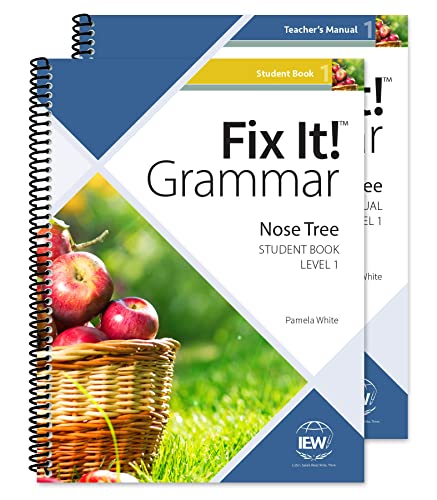
When we first started Fix It Grammar at the beginning of third grade, my child hated it. Let me explain—we began the new program at the start of the school year, and I think the dramatic switch to a written format with locating and marking nouns and verbs, etc., was overwhelming at first.
HOWEVER—after only a few weeks, he was rocking it. In fact, aside from the first day of the chapter—each chapter has 4 lessons—he could do it independently. And better yet he actually LOVED it!!
The first lesson for each week or chapter definitely requires some adult direction. There is an instruction page that the student technically could read through on their own, but I have found that I need to discuss it with him at the beginning of the week.
How We Structure Our Fix It! Grammar Lessons
If you want to do grammar 5 days a week, you could do the discussion on day one and then a written practice each of the next four days. However, we have a co-op once a week and have needed to keep it to a four-day week.
And to be honest, we haven’t done a full chapter each week, so we’ve taken it pretty slowly. But, I just plan to continue into fourth grade with Fix It! Grammar level 1 before moving on to level 2 or just doing some diagramming…I’m still working on those plans. (For reference, Fix It Grammar level one and level two are recommended for grades 3-5. Then, their level 3 moves to 6-8 grades. So we don’t need to complete an entire book in each grade level.)
When to Start Fix It! Grammar
I would NOT recommend starting this program before 3rd grade, as your child really needs to be a strong reader and able to work independently. You can certainly do it together but it works well for independent work and then follow-up with the instructor.
This program moves quickly from nouns and verbs into prepositional phrases and other higher level grammar concepts. So, it’s not what any of my second graders could have handled. And it is marketed as being for 3rd-5th grades.
What “Fix It! Grammar” Covers
It includes a written portion—copywork essentially—but they are also fixing the typos and punctuation and capitalization, so it’s grammar too.
There is also a vocabulary word for each day. The student is supposed to look it up in a dictionary and then write down the definition in a notebook. We have not used the vocabulary portion as regularly as the grammar, but the practice with looking words up in the dictionary has been helpful.
Fit It Grammar doesn’t do sentence diagramming. Instead, it does what I would call “parsing” the sentences.
In short, the concepts covered by Fix It Grammar include:
English grammar/Parsing
Copywork
Vocabulary
Dictionary skills
Moving Forward

At the time of writing we are still finishing up third grade. And I am in the process of planning the next school year. I intend to continue with the Fix It Grammar level 1 and add in some diagramming along with lots of Writing instruction. But I’ll fill you in later on what we do down the road…
Related Digital Products
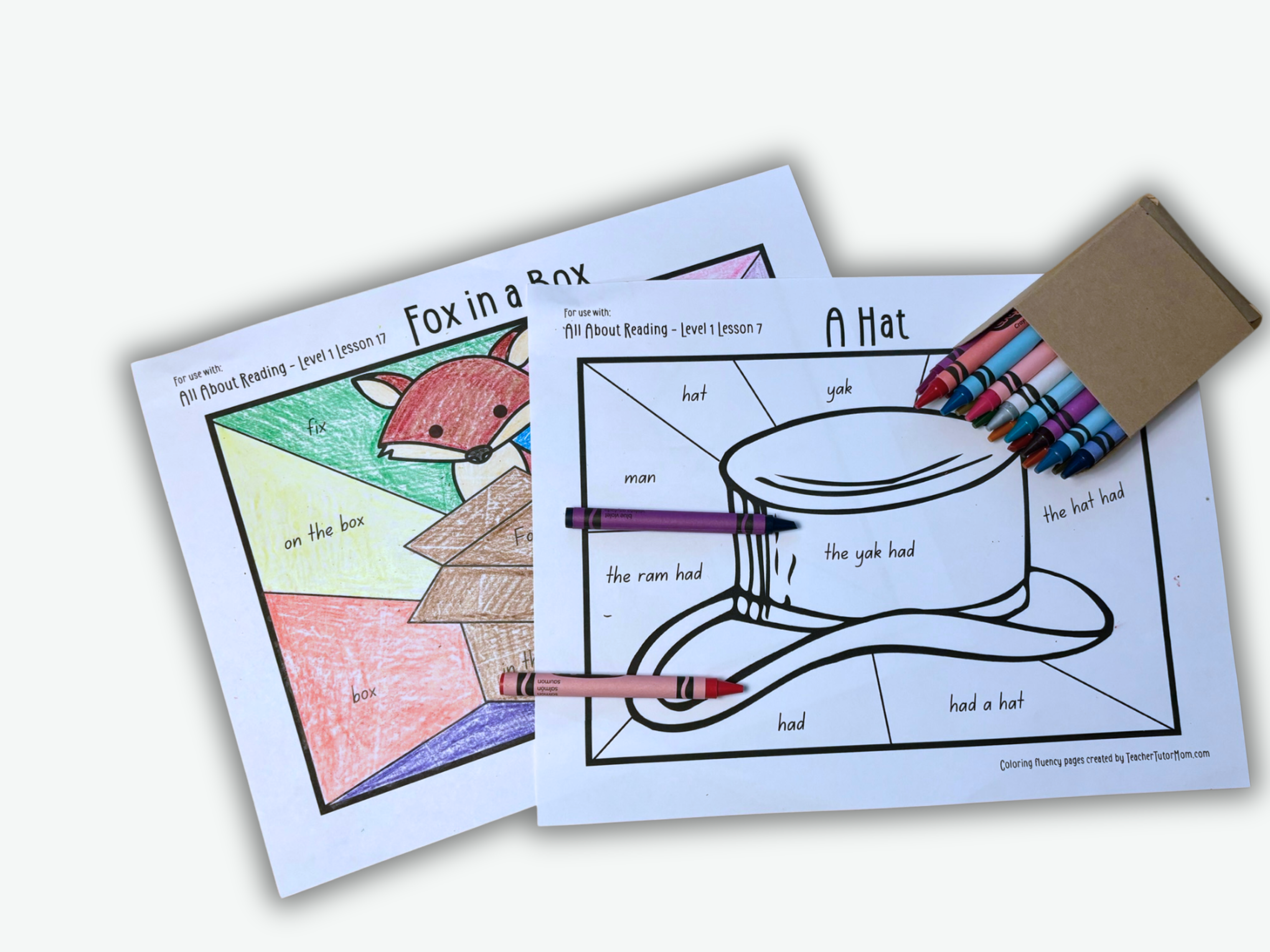
These coloring pages supplement your All About Reading Level 1 homeschool curriculum by providing a FUN and interactive way to practice the fluency sheets!! Rather than just read the list of words, use these pages to review words and phrases with your kiddo.
**This is a DIGITAL DOWNLOAD.** No physical product will be mailed to you.
𝟓𝟐 𝐩𝐚𝐠𝐞𝐬 𝐨𝐟 𝐃𝐢𝐠𝐢𝐭𝐚𝐥 𝐏𝐃𝐅𝐬, 𝟖.𝟓” 𝐱 𝟏𝟏” (𝐔𝐒 𝐋𝐞𝐭𝐭𝐞𝐫) 𝐬𝐢𝐳𝐞
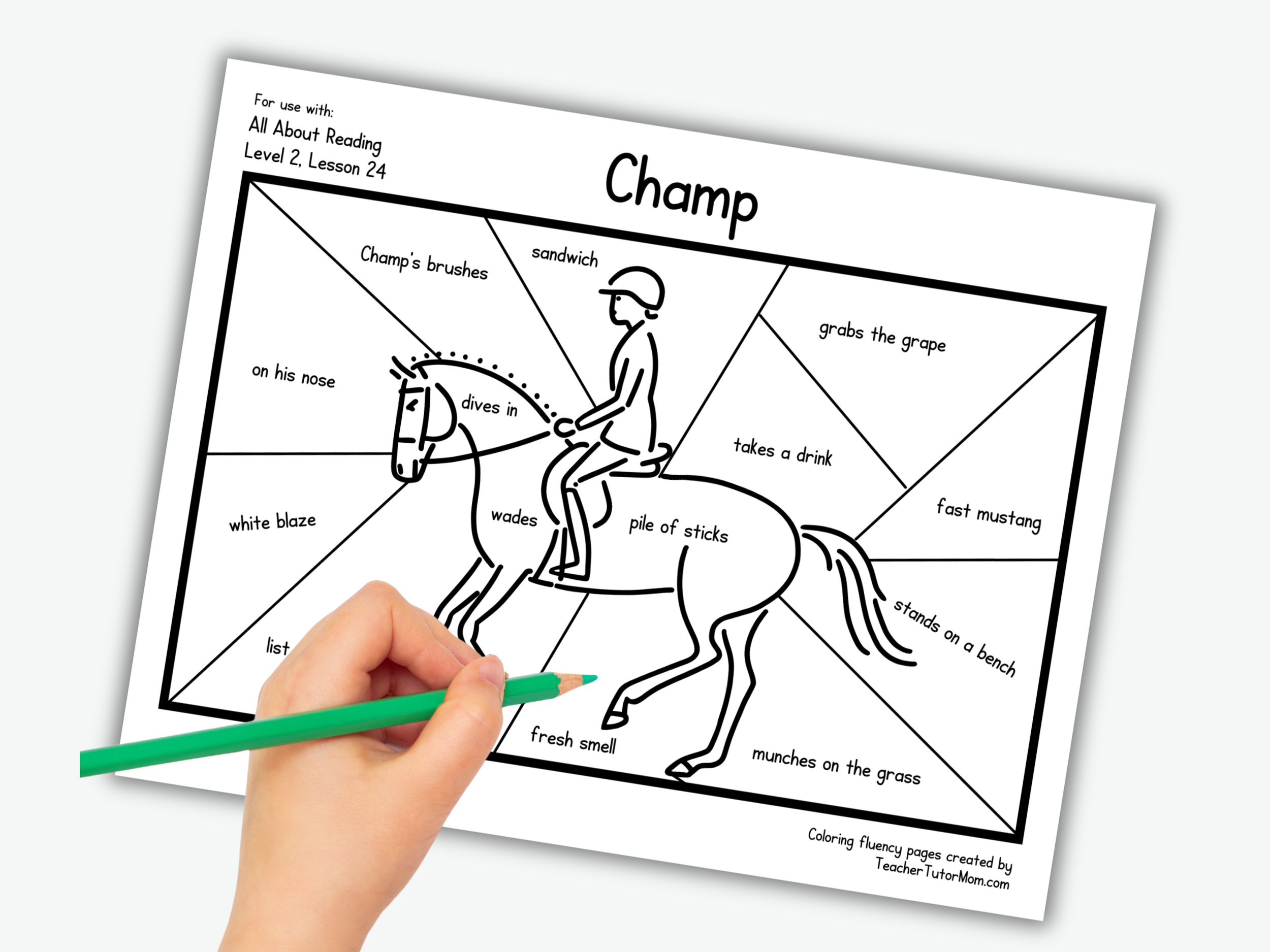
These coloring pages supplement your All About Reading Level 2 homeschool curriculum by providing a FUN and interactive way to practice the fluency sheets for each story!! Rather than just read the list of words, use these pages to review words and phrases with your kiddo.
This is a DIGITAL DOWNLOAD. No physical product will be mailed to you.
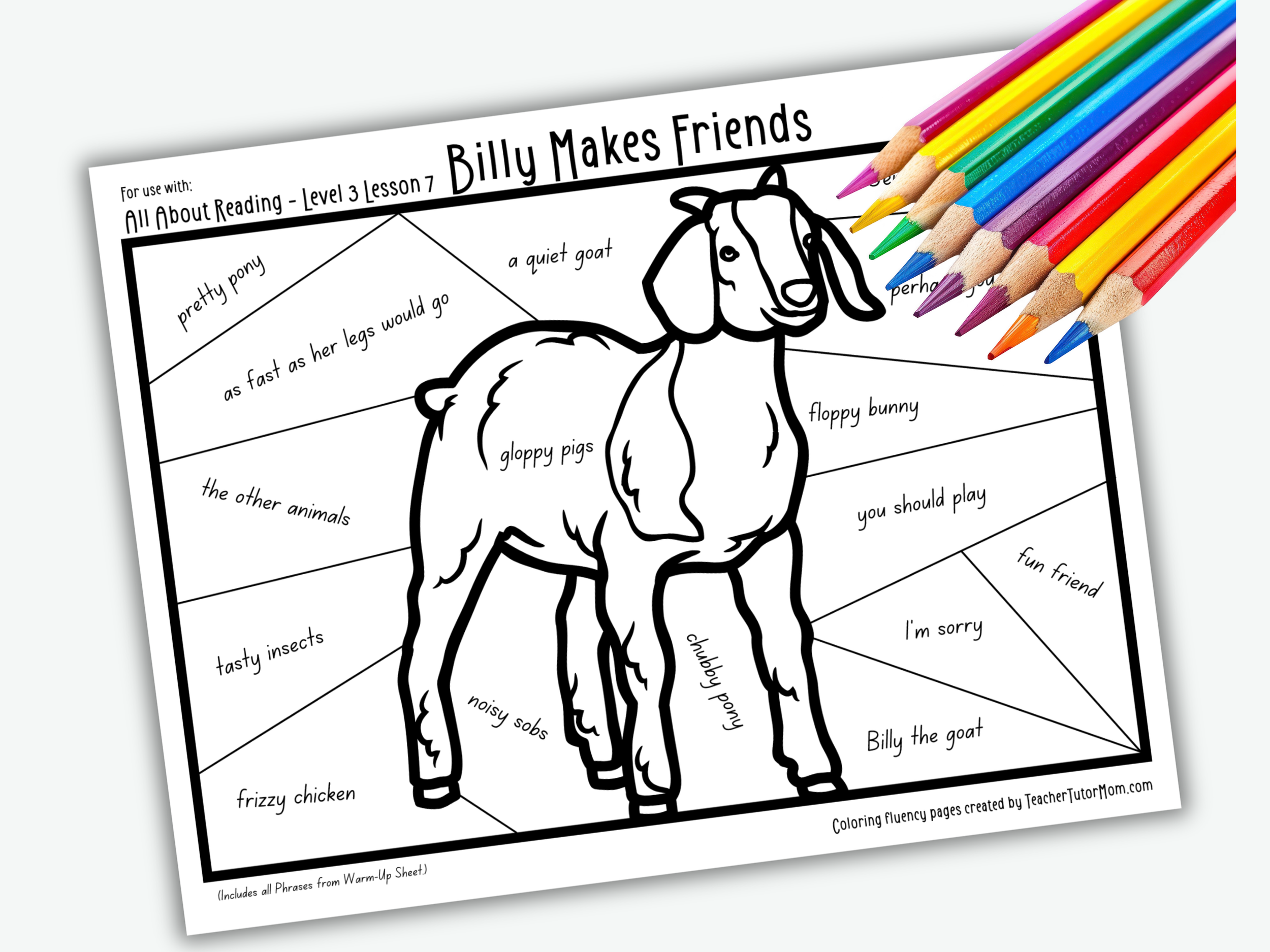
𝐓𝐡𝐢𝐬 𝐀𝐥𝐥 𝐀𝐛𝐨𝐮𝐭 𝐑𝐞𝐚𝐝𝐢𝐧𝐠 𝐀𝐝𝐝-𝐨𝐧 𝐑𝐞𝐬𝐨𝐮𝐫𝐜𝐞 𝐢𝐬 𝐚 𝐠𝐫𝐞𝐚𝐭 𝐬𝐮𝐩𝐩𝐥𝐞𝐦𝐞𝐧𝐭 𝐭𝐨 𝐭𝐡𝐞 𝐀𝐀𝐑 𝐡𝐨𝐦𝐞𝐬𝐜𝐡𝐨𝐨𝐥 𝐜𝐮𝐫𝐫𝐢𝐜𝐮𝐥𝐮𝐦 𝐥𝐞𝐯𝐞𝐥 𝟑! Instead of reading the long fluency pages, just have your kid read a section of these coloring pages and then color that section! Turn the reading fluency sheets into a game!!
This is a 𝐃𝐈𝐆𝐈𝐓𝐀𝐋 𝐃𝐎𝐖𝐍𝐋𝐎𝐀𝐃. No physical product will be mailed to you.
25 pages of Digital PDFs, 8.5” x 11” (US Letter) size
These documents contain 25 pages of printable Fluency Practice COLORING SHEETS to supplement All About Reading Level 3. A coloring page is included for each story in Level 3, with words and phrases taken from the fluency Warm-Up Sheets for each story. This is an add-on item intended for use with All About Reading Level 3.
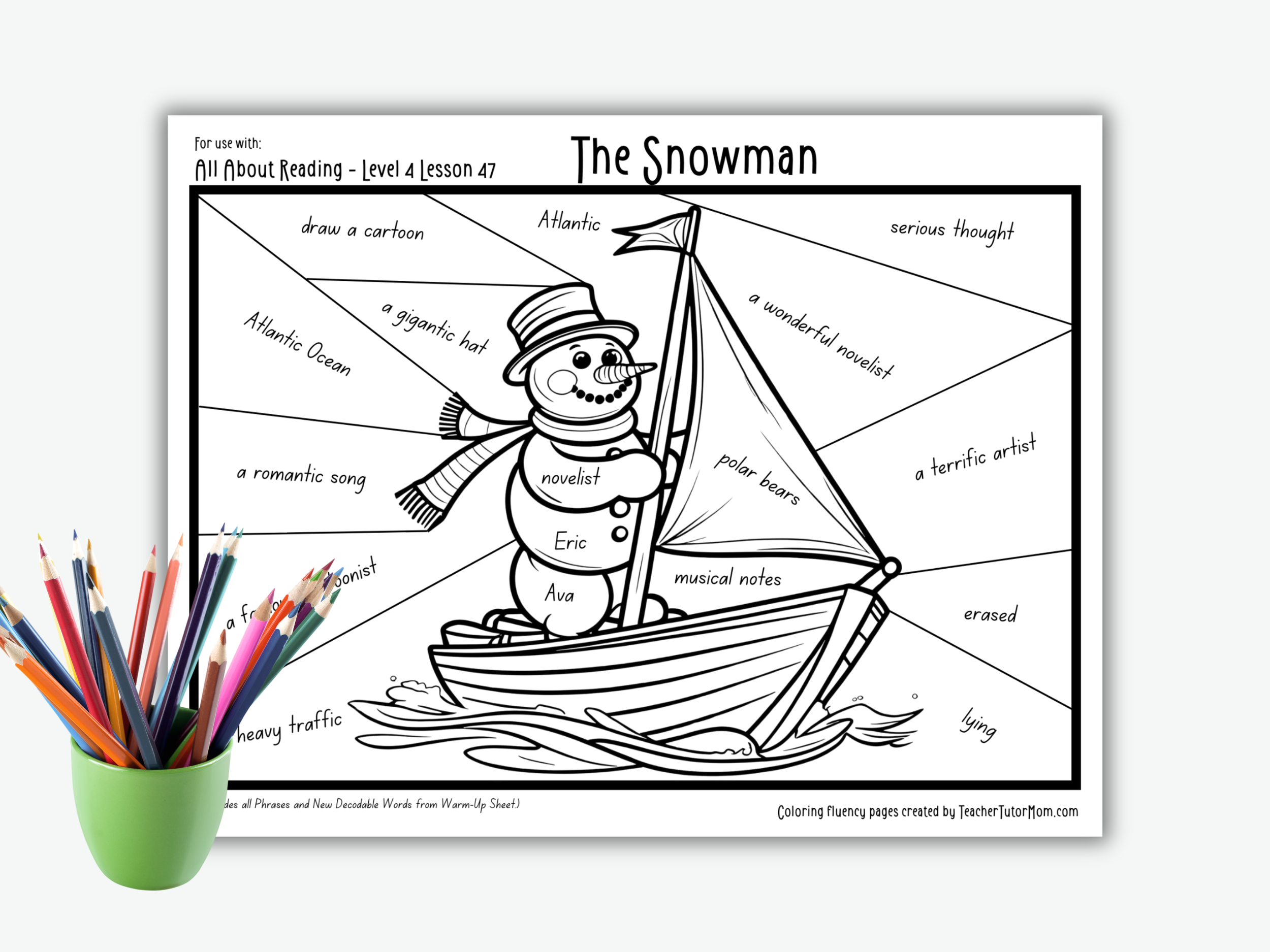
𝐓𝐡𝐢𝐬 𝐀𝐥𝐥 𝐀𝐛𝐨𝐮𝐭 𝐑𝐞𝐚𝐝𝐢𝐧𝐠 𝐀𝐝𝐝-𝐨𝐧 𝐑𝐞𝐬𝐨𝐮𝐫𝐜𝐞 𝐢𝐬 𝐚 𝐠𝐫𝐞𝐚𝐭 𝐬𝐮𝐩𝐩𝐥𝐞𝐦𝐞𝐧𝐭 𝐭𝐨 𝐭𝐡𝐞 𝐀𝐀𝐑 𝐡𝐨𝐦𝐞𝐬𝐜𝐡𝐨𝐨𝐥 𝐜𝐮𝐫𝐫𝐢𝐜𝐮𝐥𝐮𝐦 𝐥𝐞𝐯𝐞𝐥 𝟒! Instead of reading the long fluency pages, just have your kid read a section of these coloring pages and then color that section! Turn the reading fluency sheets into a game!!
**This is a 𝐃𝐈𝐆𝐈𝐓𝐀𝐋 𝐃𝐎𝐖𝐍𝐋𝐎𝐀𝐃.** No physical product will be mailed to you.
29 pages of Digital PDFs, 8.5” x 11” (US Letter) size